blog

Nehbi - Buy, Sell & Rent Verified Properties Across India

Residential Plot vs Ready-Built House: Which Is the Smarter Buy?

Buying property in India is a major financial decision. For many buyers, the choice comes down to two options: purchasing a residential plot and building a home later, or buying a ready-built house that can be occupied immediately. Both options have advantages, but the smarter purchase depends on your budget, lifestyle, investment goals, and how soon you need a home. A residential plot offers flexibility and the opportunity to design a house according to your preferences. A ready-built house provides convenience, immediate use, and potentially quicker rental income. If you are planning to buy property in India, this guide will help you compare the two options and understand what to check before making a decision. 1. What Is the Difference Between a Residential Plot and a Ready-Built House? A residential plot is a piece of land intended for residential use, subject to applicable land-use rules and approvals. You purchase the land and construct a house when you are ready, after obtaining the required permissions. A ready-built house is an already constructed residential property. Depending on its condition and legal status, you may be able to move in, rent it out, or renovate it after purchase. The main difference is simple: a plot gives you greater control over future construction, while a ready-built house offers immediate usability. 2. Advantages of Buying a Residential Plot Freedom to Design Your Own Home One of the biggest benefits of purchasing a plot is the ability to plan a house that matches your requirements. You can work with an architect to decide: Your design must still comply with local building regulations, approved plans, and applicable restrictions. Potential for Long-Term Land Appreciation Land in areas with improving infrastructure, employment opportunities, and residential demand may increase in value over time. However, appreciation is never guaranteed. A plot in an unsuitable location or an unapproved layout may be difficult to sell and could carry significant legal or financial risks. Construction Can Be Planned in Stages If you have sufficient funds and the necessary approvals, construction may be planned according to your budget and requirements. For example, you may build a smaller home initially and plan future expansion where local regulations and the approved design permit it. Lower Initial Purchase Price in Some Locations A plot may cost less upfront than a ready-built house in the same broad area. However, the final cost can be much higher after construction, approvals, utilities, and other expenses are included. Remember: The land price is only one part of the total cost of building a home. 3. Disadvantages of Buying a Residential Plot Construction Requires Time A plot cannot provide immediate accommodation. You need to plan the design, approvals, contractor selection, construction, and finishing work. Depending on the size and complexity of the project, construction may take many months or longer. Construction Costs Can Increase Building expenses may include: Material prices, labour availability, and construction delays can affect your budget. Legal Verification Can Be Complex Land purchases require careful checks regarding ownership, land use, access, boundaries, and approvals. A plot may look attractive but still have unresolved ownership disputes, restrictions, or development issues. Vacant Land Requires Protection An empty plot may need fencing, regular visits, maintenance, and protection against encroachment or unauthorised use. This can create additional responsibilities, especially if you live in another city. 4. Advantages of Buying a Ready-Built House Move In Without Waiting for Construction A ready-built house is useful if you need accommodation immediately. You can inspect the property, understand its layout, and estimate the work needed before moving in. This may be particularly helpful for families relocating for employment, education, or personal reasons. Easier to Estimate the Overall Purchase Cost With a ready-built property, the purchase price is usually known before the transaction. You still need to budget for stamp duty, registration, legal fees, repairs, furnishing, and other applicable costs, but you do not need to manage an entire construction project. Potential for Immediate Rental Income If the property is in a suitable location and rental demand exists, you may be able to rent it out after completing the purchase and necessary formalities. Rental income depends on location, property condition, tenant demand, and ongoing expenses. It should not be assumed or guaranteed. Existing Infrastructure A ready-built house may already have access to roads, electricity, water, drainage, and other facilities. However, buyers should verify the actual availability and legality of these services rather than relying only on the seller’s statements. 5. Disadvantages of Buying a Ready-Built House Limited Customisation The layout, construction style, and room arrangement are already established. Renovation may be possible, but it can increase costs and may require approvals, especially for structural changes. Repairs and Maintenance An older house may require repairs to plumbing, electrical systems, roofing, walls, or flooring. Before purchasing, inspect the property carefully and consider hiring a qualified professional to assess its condition. Higher Initial Investment A ready-built house may cost more than an empty plot in the same locality because the price includes the land and the constructed structure. Compare properties based on their total value, location, condition, and usable space—not just the advertised price. 6. Residential Plot vs Ready-Built House: Comparison Factor Residential Plot Ready-Built House Immediate occupancy Not possible until construction is completed Usually possible after purchase and formalities Customisation Greater flexibility Limited unless renovation is undertaken Initial cost May be lower in some locations Often higher Construction responsibility Buyer manages construction No new construction required Rental income Usually requires construction first May be possible soon after purchase Maintenance Vacant plot maintenance and protection Building maintenance and repairs Legal checks Title, land use, layout and access Title, approvals, building condition and occupancy Financing Plot loan or eligible combined financing Home loan may be available, subject to lender conditions Best suited for Long-term planning and custom construction Immediate living or rental use The comparison is general. Actual costs, loan terms, legal requirements, and property risks vary by location and transaction. 7. Which Option Is Better for Investment? There is no … Read more
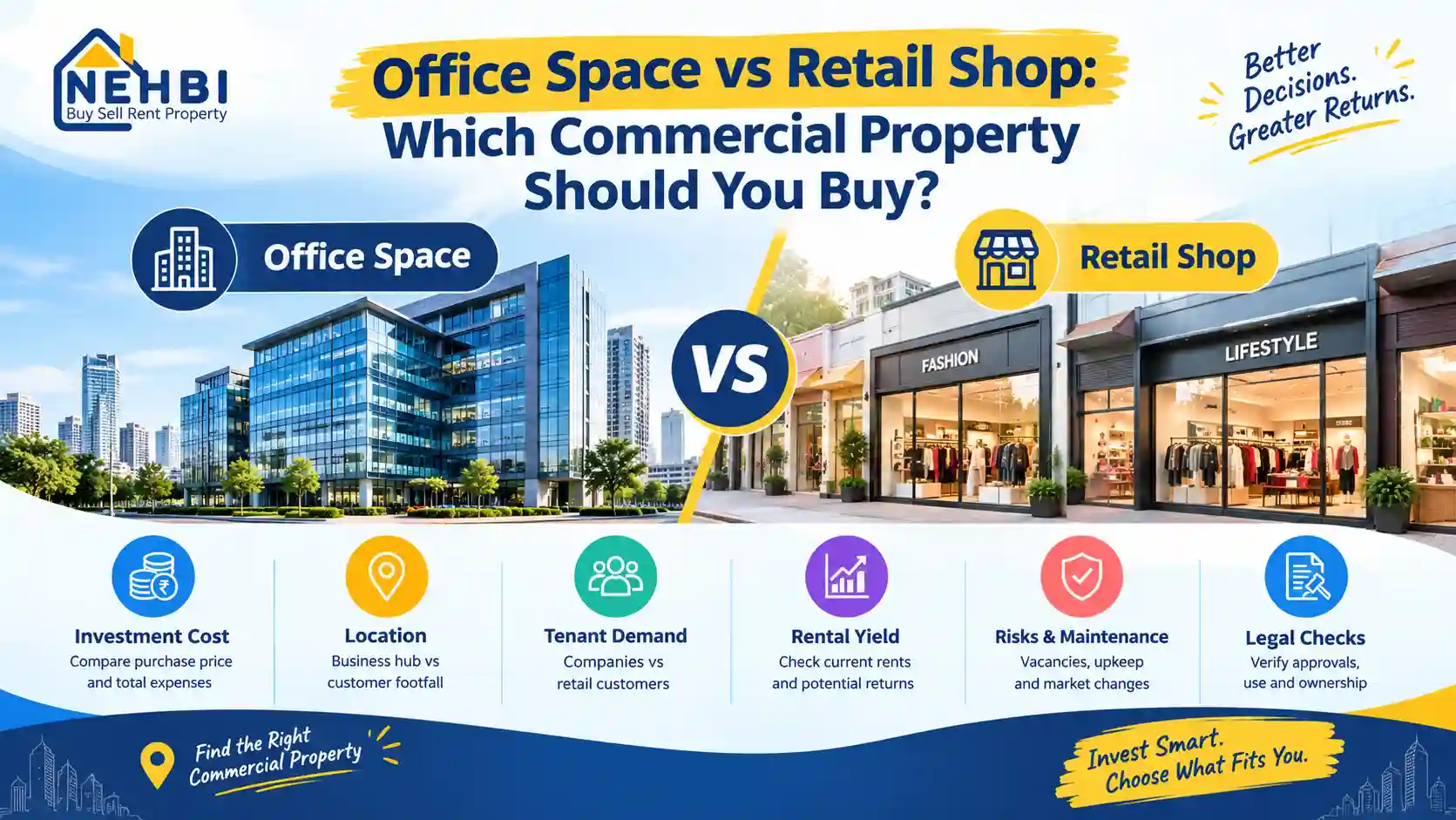
Office Space vs Retail Shop: Which Commercial Property Should You Buy?

Office Space vs Retail Shop: Which Commercial Property Should You Buy?

Investing in commercial property can be an effective way to diversify your investments and potentially earn rental income. However, choosing the right property is important because different commercial spaces attract different tenants, involve different costs, and perform differently depending on location and market demand. Two popular options for commercial property investors in India are office spaces and retail shops. Office spaces are generally used by businesses, professionals, and companies, while retail shops are designed for businesses that sell products or provide services directly to customers. But which option is better for your investment goals? The answer depends on your budget, preferred location, expected rental income, tenant demand, maintenance costs, and willingness to manage the property. In this guide, we compare office space vs retail shop investments to help you make a more informed decision. 1. Understanding Office Space Investment Office spaces are commercial properties used for business operations. They can include small private offices, coworking units, corporate offices, and larger commercial floors. Typical tenants include IT companies, consultants, financial service providers, startups, agencies, and professional firms. Advantages of buying office space Disadvantages of office space Before buying, check whether the office is suitable for the businesses operating in that area. Connectivity, internet infrastructure, parking, lifts, power backup, and building management can all influence tenant interest. 2. Understanding Retail Shop Investment Retail shops are commercial units used to sell products or provide services directly to customers. Examples include grocery stores, pharmacies, salons, clothing shops, mobile stores, cafés, and other local businesses. Their performance often depends on visibility, customer movement, neighbourhood demand, accessibility, and the surrounding business environment. Advantages of buying a retail shop Disadvantages of retail shops A retail shop’s value depends on more than its size. Check road access, frontage, signage opportunities, parking, nearby businesses, and whether the surrounding area attracts the right customers. 3. Office Space vs Retail Shop: Key Differences Factor Office Space Retail Shop Main tenants Companies, professionals, service businesses Retailers, salons, pharmacies, cafés, service providers Important location factors Business hubs, transport, office infrastructure Visibility, customer access, footfall Rental demand Depends on business activity and office requirements Depends on local spending, customer movement, and business demand Tenant arrangement May suit longer leases for established businesses Lease duration varies by business and location Property features Layout, lifts, parking, internet, power backup Frontage, visibility, access, signage Maintenance May include building management and common-area costs May include building costs and shop-specific upkeep Main risk Office vacancies and changing business demand Low footfall and weak retail demand Best suited for Investors targeting business tenants Investors targeting customer-facing businesses Neither option is automatically better. A well-located office may outperform a poorly positioned shop, while a shop in a strong local market may be more attractive than an office in an area with weak tenant demand. 4. Compare Your Investment Budget Your budget should include more than the property’s advertised price. Commercial property purchases may involve stamp duty, registration fees, applicable taxes, legal checks, brokerage, fit-out costs, and ongoing maintenance charges. Before deciding, calculate the complete acquisition cost. For example, an office in a business district may have a higher purchase price but appeal to established businesses. A smaller retail shop may cost less initially, but its rental potential will depend on visibility and customer demand. Compare properties using the same financial measures: Avoid choosing a property simply because its initial price appears affordable. A cheaper property with weak tenant demand may produce a lower return or require more time to rent out. 5. Calculate the Potential Rental Yield Rental yield helps investors compare the rent generated by different properties against their purchase cost. The basic gross rental yield formula is: Gross rental yield = (Annual rent ÷ Total purchase price) × 100 For example, suppose an office space costs ₹50 lakh and earns ₹30,000 per month in rent. Now suppose a retail shop costs ₹40 lakh and earns ₹25,000 per month. In this illustrative example, the shop has a higher gross rental yield. However, these figures do not represent actual market rates or guaranteed returns. Gross yield also excludes vacancy, maintenance, taxes, financing costs, and other expenses. Calculate the net return after relevant costs before comparing investments. 6. Choose the Right Location Location is one of the most important factors in commercial property investment, but the ideal location differs between office spaces and retail shops. For office spaces Look for areas with: For retail shops Look for areas with: Visit the location at different times and on different days. Observe customer movement, traffic, neighbouring businesses, vacant units, and nearby construction. A busy road alone does not guarantee that a particular shop will attract customers. 7. Understand the Risks Before Buying Commercial properties can offer rental opportunities, but they also involve financial and legal risks. Before buying either property type, consider the following. Vacancy risk: If a tenant leaves, you may need to cover expenses until another tenant is found. Tenant concentration: Relying on one tenant means rental income can stop if that tenant leaves or fails to pay. Market risk: Local business conditions, new developments, and changes in demand can affect rents and resale values. Maintenance risk: Building repairs, common-area expenses, equipment replacement, and refurbishment can reduce your returns. Liquidity risk: Commercial properties may take time to sell, particularly if they are in specialised buildings or locations with limited demand. Legal and approval risk: Title issues, building approvals, permitted use, and restrictions can affect your ability to rent or resell the property. Maintain a financial buffer for unexpected costs, and avoid assuming that a property will remain occupied continuously. 8. Check Legal Documents Before Purchasing Legal verification is essential for both office spaces and retail shops. Before paying a substantial advance or signing a binding agreement, consider having a qualified property lawyer review the relevant documents. Important checks include: For under-construction projects, verify the project’s applicable registration and disclosures on the relevant state RERA portal, where required. Requirements can vary depending on the project and transaction. Do not rely solely on … Read more