
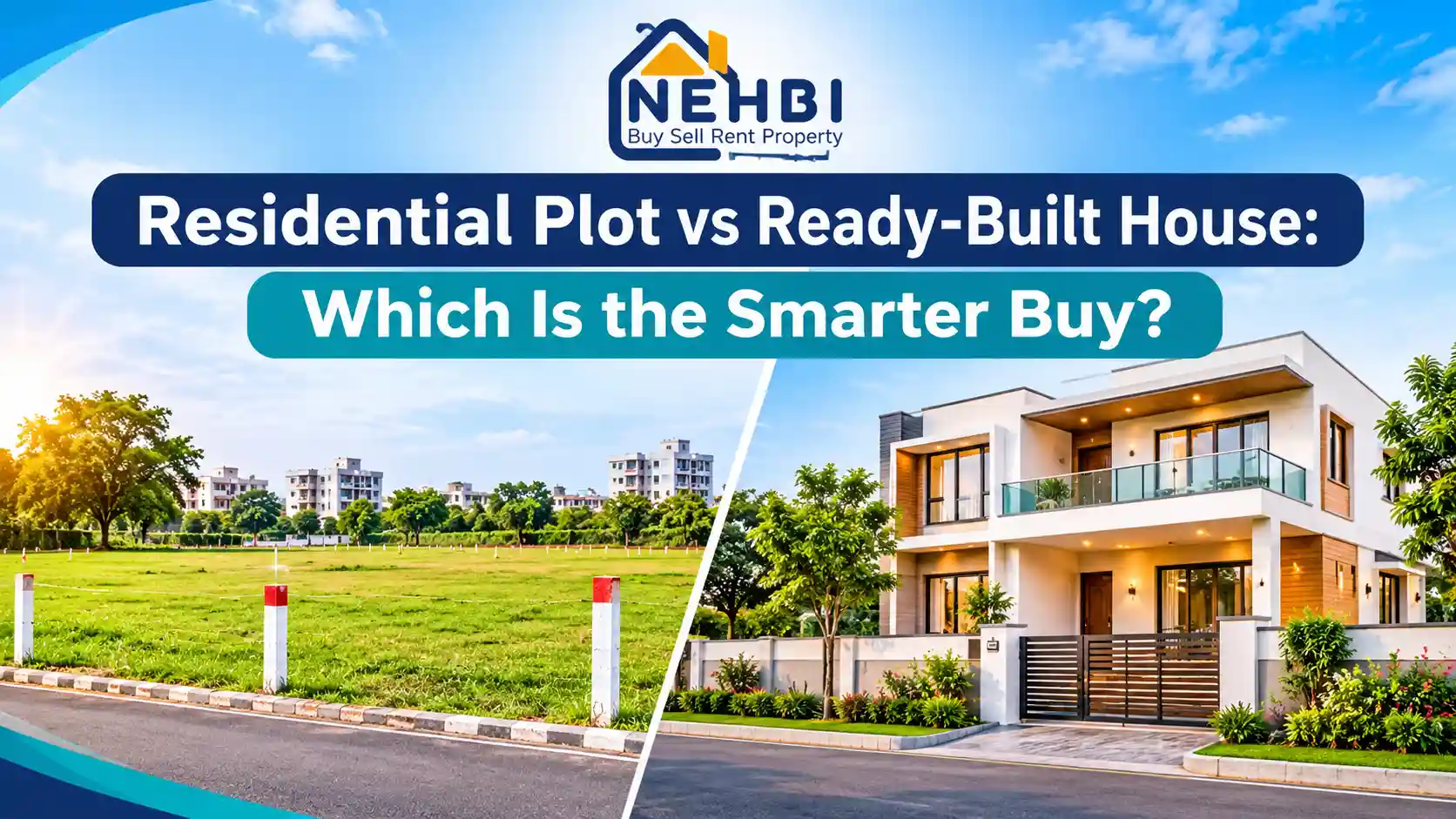
Buying property in India is a major financial decision. For many buyers, the choice comes down to two options: purchasing a residential plot and building a home later, or buying a ready-built house that can be occupied immediately.
Both options have advantages, but the smarter purchase depends on your budget, lifestyle, investment goals, and how soon you need a home.
A residential plot offers flexibility and the opportunity to design a house according to your preferences. A ready-built house provides convenience, immediate use, and potentially quicker rental income.
If you are planning to buy property in India, this guide will help you compare the two options and understand what to check before making a decision.
1. What Is the Difference Between a Residential Plot and a Ready-Built House?
A residential plot is a piece of land intended for residential use, subject to applicable land-use rules and approvals. You purchase the land and construct a house when you are ready, after obtaining the required permissions.
A ready-built house is an already constructed residential property. Depending on its condition and legal status, you may be able to move in, rent it out, or renovate it after purchase.
The main difference is simple: a plot gives you greater control over future construction, while a ready-built house offers immediate usability.
2. Advantages of Buying a Residential Plot
Freedom to Design Your Own Home
One of the biggest benefits of purchasing a plot is the ability to plan a house that matches your requirements.
You can work with an architect to decide:
- Number of bedrooms and bathrooms
- Kitchen and living-room layout
- Parking space
- Garden or terrace
- Future expansion
- Construction materials and finishes
Your design must still comply with local building regulations, approved plans, and applicable restrictions.
Potential for Long-Term Land Appreciation
Land in areas with improving infrastructure, employment opportunities, and residential demand may increase in value over time.
However, appreciation is never guaranteed. A plot in an unsuitable location or an unapproved layout may be difficult to sell and could carry significant legal or financial risks.
Construction Can Be Planned in Stages
If you have sufficient funds and the necessary approvals, construction may be planned according to your budget and requirements.
For example, you may build a smaller home initially and plan future expansion where local regulations and the approved design permit it.
Lower Initial Purchase Price in Some Locations
A plot may cost less upfront than a ready-built house in the same broad area. However, the final cost can be much higher after construction, approvals, utilities, and other expenses are included.
Remember: The land price is only one part of the total cost of building a home.
3. Disadvantages of Buying a Residential Plot
Construction Requires Time
A plot cannot provide immediate accommodation. You need to plan the design, approvals, contractor selection, construction, and finishing work.
Depending on the size and complexity of the project, construction may take many months or longer.
Construction Costs Can Increase
Building expenses may include:
- Architect and engineering fees
- Labour and construction materials
- Building permissions
- Electricity and water connections
- Boundary wall and gate
- Interior work
- Contractor charges
- Unexpected expenses
Material prices, labour availability, and construction delays can affect your budget.
Legal Verification Can Be Complex
Land purchases require careful checks regarding ownership, land use, access, boundaries, and approvals.
A plot may look attractive but still have unresolved ownership disputes, restrictions, or development issues.
Vacant Land Requires Protection
An empty plot may need fencing, regular visits, maintenance, and protection against encroachment or unauthorised use.
This can create additional responsibilities, especially if you live in another city.
4. Advantages of Buying a Ready-Built House
Move In Without Waiting for Construction
A ready-built house is useful if you need accommodation immediately.
You can inspect the property, understand its layout, and estimate the work needed before moving in.
This may be particularly helpful for families relocating for employment, education, or personal reasons.
Easier to Estimate the Overall Purchase Cost
With a ready-built property, the purchase price is usually known before the transaction.
You still need to budget for stamp duty, registration, legal fees, repairs, furnishing, and other applicable costs, but you do not need to manage an entire construction project.
Potential for Immediate Rental Income
If the property is in a suitable location and rental demand exists, you may be able to rent it out after completing the purchase and necessary formalities.
Rental income depends on location, property condition, tenant demand, and ongoing expenses. It should not be assumed or guaranteed.
Existing Infrastructure
A ready-built house may already have access to roads, electricity, water, drainage, and other facilities.
However, buyers should verify the actual availability and legality of these services rather than relying only on the seller’s statements.
5. Disadvantages of Buying a Ready-Built House
Limited Customisation
The layout, construction style, and room arrangement are already established.
Renovation may be possible, but it can increase costs and may require approvals, especially for structural changes.
Repairs and Maintenance
An older house may require repairs to plumbing, electrical systems, roofing, walls, or flooring.
Before purchasing, inspect the property carefully and consider hiring a qualified professional to assess its condition.
Higher Initial Investment
A ready-built house may cost more than an empty plot in the same locality because the price includes the land and the constructed structure.
Compare properties based on their total value, location, condition, and usable space—not just the advertised price.
6. Residential Plot vs Ready-Built House: Comparison
| Factor | Residential Plot | Ready-Built House |
|---|---|---|
| Immediate occupancy | Not possible until construction is completed | Usually possible after purchase and formalities |
| Customisation | Greater flexibility | Limited unless renovation is undertaken |
| Initial cost | May be lower in some locations | Often higher |
| Construction responsibility | Buyer manages construction | No new construction required |
| Rental income | Usually requires construction first | May be possible soon after purchase |
| Maintenance | Vacant plot maintenance and protection | Building maintenance and repairs |
| Legal checks | Title, land use, layout and access | Title, approvals, building condition and occupancy |
| Financing | Plot loan or eligible combined financing | Home loan may be available, subject to lender conditions |
| Best suited for | Long-term planning and custom construction | Immediate living or rental use |
The comparison is general. Actual costs, loan terms, legal requirements, and property risks vary by location and transaction.
7. Which Option Is Better for Investment?
There is no universal answer to whether a plot or a ready-built house is a better investment.
A Residential Plot May Suit You If:
- You have a long investment horizon.
- You do not need immediate rental income.
- You want to construct your own home.
- You understand land-related legal checks.
- You can manage construction or hire trusted professionals.
- You can afford to hold the property without immediate income.
A Ready-Built House May Suit You If:
- You want to move in soon.
- You want to avoid managing construction.
- You are considering rental income.
- You prefer a property with existing infrastructure.
- You want to inspect the actual building before purchase.
- You have limited time to oversee a construction project.
Neither option guarantees capital appreciation. Property value depends on location, demand, infrastructure, legal status, market conditions, and the quality of the purchase.
8. What About Home Loans and Financing?
Financing conditions can differ between a plot and a ready-built house.
A lender may offer a plot loan for eligible residential land and a home loan for a ready-built property. Some lenders also offer combined plot-and-construction financing, subject to their conditions.
Before applying, compare:
- Interest rate
- Loan amount and margin requirement
- Repayment tenure
- Processing fees
- Required property approvals
- Construction deadlines, if applicable
- Eligibility and documentation
Do not assume that plot loans and home loans have identical terms.
Tax treatment also depends on the loan purpose, property use, construction status, and applicable tax rules. Confirm your specific eligibility with a qualified tax professional before relying on any tax benefit.
9. Legal Checklist Before Buying a Residential Plot
Land verification is especially important when purchasing a plot.
Ask a qualified property lawyer to independently review the relevant documents, which may include:
- Title deed and ownership history
- Encumbrance certificate or relevant registration records
- Approved layout plan
- Land-use classification and conversion permissions, where applicable
- Survey number and land measurements
- Boundary and access details
- Property tax records
- Relevant local authority approvals
- Seller’s identity and authority to sell
- Existing loans, claims, or disputes
Document requirements vary by state and property type. For example, land records used in Maharashtra may differ from those used in other states.
Do not rely only on photocopies, seller assurances, or a broker’s verbal confirmation.
10. Legal Checklist Before Buying a Ready-Built House
Before buying a constructed property, check:
- Seller’s ownership and title documents
- Sale deed and registration records
- Approved building plan
- Completion certificate, where applicable
- Occupancy certificate, where applicable
- Property tax receipts
- Utility bills and outstanding dues
- Existing mortgage or legal claims
- Building condition and structural concerns
- Access roads and essential services
- Applicable RERA details for relevant projects
For resale properties, confirm that the seller has the legal authority to transfer ownership and that the documents match the actual property.
11. Hidden Costs You Should Include in Your Budget
Whether you buy land or a ready-built house, the advertised price is not necessarily the final cost.
For a Residential Plot
Include:
- Stamp duty and registration
- Legal verification and survey
- Layout or development-related charges, where applicable
- Fencing and security
- Building permissions
- Architect and contractor fees
- Construction and utility connections
For a Ready-Built House
Include:
- Stamp duty and registration
- Legal and loan processing fees
- Repairs and renovation
- Interior furnishing
- Maintenance and property tax
- Utility connection or outstanding charges
- Moving expenses
A realistic budget should also include an emergency reserve.
12. Common Mistakes Buyers Should Avoid
- Buying land without independent legal verification
- Assuming every plotted layout is approved
- Ignoring road access and utilities
- Choosing a property only because the price is low
- Underestimating construction costs
- Skipping a professional building inspection
- Ignoring resale demand
- Relying on promised future infrastructure
- Paying a large advance before checking documents
- Making a decision without comparing total costs
Take time to inspect the property and review the paperwork before signing or transferring money.
Final Verdict: Which Is the Smarter Buy?
A residential plot may be the smarter choice if you want long-term flexibility, plan to build a customised home, and can manage the legal and construction responsibilities.
A ready-built house may be the smarter choice if you need immediate accommodation, prefer a more predictable purchase process, or want the possibility of rental income without waiting for construction.
The best decision depends on your financial situation, location, time horizon, and personal goals.
Before making a purchase, compare the complete cost, verify the documents independently, and consult qualified legal and financial professionals where necessary.
If you are exploring residential plots or houses in India, Nehbi.com can help you discover property listings and compare options. Always verify ownership, approvals, and property details before finalising a deal.
Disclaimer: This article is for general informational purposes only and is not legal, financial, or investment advice. Property rules and documentation requirements vary by state and local authority. Consult qualified professionals before purchasing.